
Does Homeowners Insurance Cover Mold in Michigan?
Does homeowners insurance cover mold in Michigan? Sometimes. Many Michigan homeowners policies cover mold only when it comes from a covered water loss, often with a separate mold cap. Sewer backup and sump pump failure usually need an added endorsement. Mold from slow leaks, condensation or high humidity is commonly excluded. This guide explains how that tends to work for homes in Ann Arbor, MI and Washtenaw County, and what to do before you sign a remediation contract. It is general information, not insurance or legal advice, and your policy wording is what counts.
Short version. Check your declarations page for a mold or "fungi" limit and a water backup endorsement. Call your insurer or agent before you sign a remediation contract. No mold company can promise that a claim will be paid.
Where the water came from matters most
Insurers usually look first at the cause of the moisture, not at the mold itself. The table below shows common patterns. Policies differ, so treat it as a list of questions to ask, not an answer.
| Source of water | How policies often treat it | What to check |
|---|---|---|
| Sudden pipe burst or appliance leak | Often a covered loss; resulting mold may be covered up to a limit | Mold or fungi limit; how fast you reported it |
| Slow leak, condensation, high humidity | Commonly excluded as wear, maintenance or long-term damage | Exclusion wording for "continuous or repeated" leakage |
| Sewer backup or sump pump failure | Usually needs a separate water backup endorsement | Whether you have the endorsement and its dollar limit |
| Surface flooding or groundwater | Usually excluded from homeowners policies | Separate flood insurance (NFIP or private) |
| Storm damage to the roof | Often covered; mold from a later leak depends on timing and repairs | Photos and dates of the storm and the repair |
Michigan's Department of Insurance and Financial Services (DIFS) has said in its consumer advice that water and sewer backup is not automatically covered under a homeowners or renters policy. Basement backups are common in older parts of southeast Michigan, so the backup endorsement is often the single most important line on an Ann Arbor policy.
Mold limits and exclusions
Many policies that do cover mold put a separate dollar cap on it, which can be much lower than the limit for the house. The cap may cover testing, removal and rebuild together. Some policies exclude mold entirely unless it results from a covered peril. Look for words like "fungi," "mold," "wet or dry rot" and "bacteria" in your policy, and ask your agent what the limit is in dollars.
What the June 2021 storm showed
On June 25–26, 2021, about 4.8 inches of rain fell on parts of Ann Arbor, a storm with roughly a 1% chance of happening in any given year, according to the City of Ann Arbor's storm analysis. Basement backups were reported across the city, with the Pittsfield Village neighborhood hit hardest. FEMA's disaster declaration DR-4607 later covered Washtenaw County. A county commissioner said at the time that many residents did not have the flood insurance needed to cover their losses. For many households, the question after that storm was not mold coverage but whether they had a backup endorsement or flood policy at all.
What to do after water damage, before you file
- Stop the water if you safely can, and fix or shut off the source.
- Take photos and video of the water, the source and damaged belongings before cleanup starts.
- Call your insurer or agent early. Many policies require prompt notice. Ask what they want before anything is thrown out.
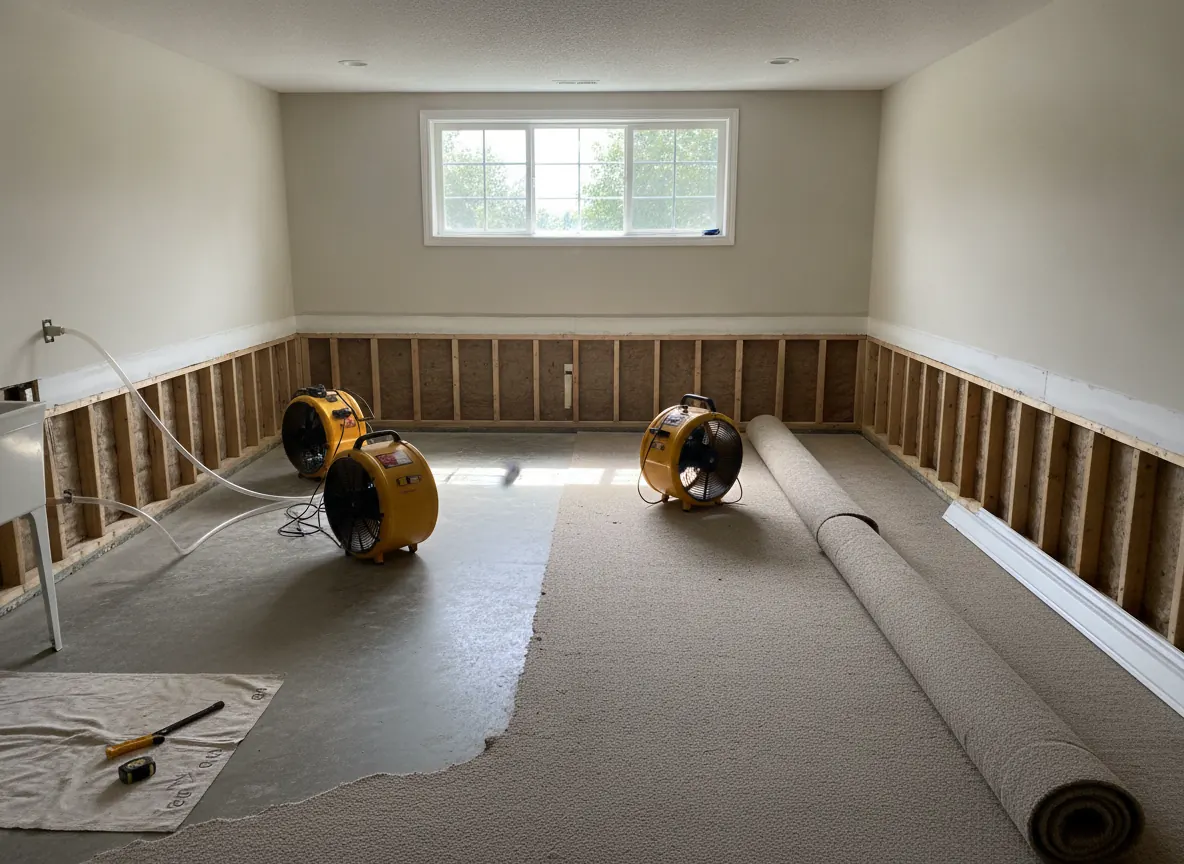
- Dry things fast. EPA says to dry water-damaged areas and items within 24 to 48 hours to prevent mold growth. Delays can also hurt a claim.
- Keep receipts for fans, dehumidifiers, hotel stays and emergency work.
- Get written scopes from remediation companies that list areas, materials and steps, so your adjuster can compare them.
The basement flooding checklist goes through the first 48 hours step by step, and the water damage and mold page covers what companies typically do.
Working with mold companies on a claim
A detailed written estimate helps an adjuster understand the job, but the insurer, not the company, decides what is covered. Be careful with anyone who says insurance "will pay for everything," or who presses you to sign before your insurer has responded. Read any form that asks you to assign insurance benefits or send payment directly to a company, and ask your insurer about it first.
If you sign a contract at your home, you generally have 3 business days to cancel (MCL 445.111–.113). Be cautious about signing an "emergency" waiver of that right under pressure. Michigan's Consumer Protection Act (MCL 445.903) bans misleading claims, and complaints can go to the Michigan Attorney General.
Michigan license check. Michigan doesn't license mold remediation companies, and the state health department doesn't certify mold remediators or testers. Repair and rebuild work of $600 or more, such as replacing drywall or insulation, generally needs a Residential Builder or Maintenance & Alteration license from LARA (MCL 339.2401–2404). Ask for the license number and verify it with LARA.
How much might you pay out of pocket?
Published national estimates for a typical mold remediation job run about $1,500 to $9,000 (Fixr, Aug 2025) and $1,200 to $3,750 (This Old House with Angi data, Mar 2026). Basements run about $1,500 to $4,000 (Fixr) or $500 to $3,000 (This Old House). Your deductible, any mold cap and any rebuild costs all shape what you pay. See the mold remediation cost guide for the full table.
Renters and landlords
Renters insurance generally covers your belongings, not the building. In Michigan, landlords must keep rentals fit for the use intended and in reasonable repair (MCL 554.139); the law does not name mold, but the leaks behind it are usually the landlord's to fix. Tell your landlord in writing. Ann Arbor tenants can then contact Rental Housing Services at 734-794-6264. The rental mold page has more. This is not legal advice.
Where to get help with an insurance question
If you have trouble getting a straight answer from your insurer, DIFS runs a consumer line at 877-999-6442. It can explain how policies generally work and how to file a complaint.
Ann Arbor Mold Experts is a free quote service in Ann Arbor, MI, not a mold company. It does not inspect, test or remove mold. Describe your situation any time; independent local companies reply on their own schedules. Some companies pay to receive requests, and none of them is affiliated with this site. Request free quotes or call (734) 888-2281.
Frequently asked questions
Does homeowners insurance cover mold in Michigan?
Sometimes. Many policies cover mold only when it results from a covered, sudden water loss such as a burst pipe, and often only up to a separate mold limit. Mold from slow leaks, condensation or humidity is commonly excluded. Check your declarations page and ask your insurer or agent.
Is sump pump failure covered in Michigan?
Often only if you bought a water backup or sump pump endorsement. Michigan's insurance department has said sewer and water backup is not automatically covered under homeowners or renters policies. The endorsement usually has its own dollar limit, so ask your agent how much it pays.
Does flood insurance cover basement mold?
Flood insurance is separate from homeowners insurance and is sold through the National Flood Insurance Program or private insurers. Mold coverage under a flood policy depends on its terms, including whether you took reasonable steps to dry the home. Read the policy and ask the insurer before you count on it.
Who can I call about a mold insurance claim in Michigan?
Start with your insurer or agent. If you can't get a clear answer, Michigan's Department of Insurance and Financial Services has a consumer line at 877-999-6442. It can explain how policies generally work and how to file a complaint. It can't promise that a claim will be paid.