
Mold Removal in Ann Arbor, MI
Describe the mold once, and independent local remediation companies serving Ann Arbor and Washtenaw County can reply with free quotes. This page explains what careful mold removal involves, what it tends to cost, and what Michigan says to check before you sign.
Get a Free Quote Call (734) 888-2281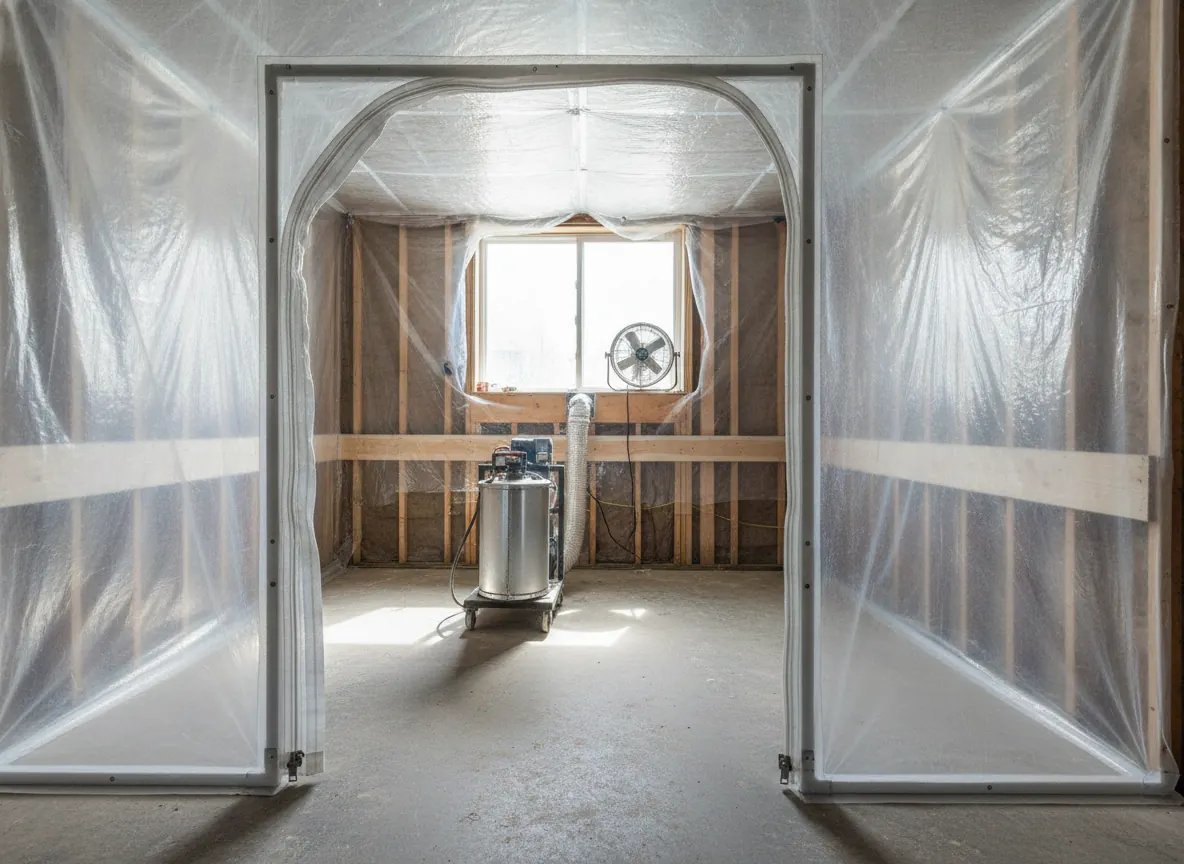
Signs the mold needs more than a sponge
Mold needs moisture, something to feed on and time. So the real question is always: where is the water coming from?
- A musty smell that comes back after you clean or air out a room
- Spots that return in the same place on a wall, ceiling, closet or baseboard
- Stained, bubbling or soft drywall near a window, tub, sink or the basement floor
- A leak, backup or wet carpet that took more than a day or two to dry
Common sources in Ann Arbor homes are damp basements, roof and plumbing leaks, bathrooms without a working fan, and attics that collect moisture in winter. If you smell mold but can't see it, start with mold inspection and testing.
What a mold remediation company typically does
A careful written quote usually covers these steps, in this order.
Find and stop the water
Moisture readings trace the source: a leak, a damp foundation wall, a backup or condensation. If the water isn't fixed, the mold usually comes back.
Set up containment
Plastic sheeting seals the work area, often with a zipper door. An air scrubber with a HEPA filter keeps air moving out of the space so dust and spores stay in the work zone.
Remove what can't be cleaned
Moldy drywall, insulation, carpet and pad are cut out, bagged inside containment and carried out.
Clean and dry what stays
Studs, block walls and subfloor are HEPA vacuumed and cleaned. Dehumidifiers and air movers run until readings show the material is dry.
Check and document
You get written records of what was done. For a clearance test, consider a tester independent of the remediation company.
Rebuilding (new drywall, insulation, paint, flooring) is often a separate contract, and work of $600 or more generally needs a LARA-licensed contractor. The full sequence is on the process page.
Michigan license check
Michigan doesn't license mold remediation companies, and the state health department doesn't certify mold remediators or testers. Repair and rebuild work of $600 or more, such as replacing drywall or insulation, generally needs a Residential Builder or Maintenance & Alteration license from LARA (MCL 339.2401–2404). Ask for the license number and verify it with LARA.
Private industry credentials are not state licenses; ask about training.
Mold removal in Ann Arbor: what is different here
Start with the houses. The median home in Ann Arbor was built in 1971, and about 63% of homes were built before 1980 (American Community Survey 2020–2024). Older foundations, plumbing, windows and roofs give water more ways in.
Then the weather. Ann Arbor averages about 38.3 inches of precipitation and 61 inches of snow a year (NOAA 1991–2020 normals, University of Michigan station). Summer dew points average about 61°F at Detroit Metro airport, the nearest station with hourly normals. A cool basement wall can sit below that, so humid summer air can condense on it.
Storms matter too. On June 25–26, 2021, about 4.8 inches of rain fell on parts of Ann Arbor, roughly a 100-year storm. The city's report found basement backups were centered on the Pittsfield Village neighborhood, and FEMA disaster DR-4607 covered Washtenaw County. If water came in recently, read mold after leaks and basement flooding.
About 54.5% of occupied Ann Arbor homes are rented (ACS 2020–2024). Renters should tell the landlord in writing first; see mold in rentals and student housing. In the city's 15 local historic districts, such as the Old West Side, exterior changes like windows, siding or regrading may need Historic District Commission review.
The same independent companies often quote across Ypsilanti, Saline, Dexter, Chelsea and the nearby townships. See all service areas.
Where the mold is changes the job: basement, attic, crawl space, or dark or "black" mold on drywall.
What mold removal costs
Size, location, material removed and drying time drive the price. Testing, fixing the water and rebuilding are usually separate.
| Item | Typical range | Source |
|---|---|---|
| Mold remediation, typical job | $1,500–$9,000 (avg ≈ $3,500) · $1,200–$3,750 (avg ≈ $2,300) | Fixr, Aug 2025 · This Old House, Mar 2026 |
| Per square foot | $10–$30 · $10–$25 | Fixr · This Old House |
| Basement | $1,500–$4,000 · $500–$3,000 | Fixr · This Old House |
| Attic | $1,500–$9,000 · $1,000–$4,000 | Fixr · This Old House |
| Crawl space | $500–$2,000 | Fixr, This Old House |
| Mold inspection / testing | $450–$800 (avg ≈ $500); inspection only $300–$600 | Fixr, Jan 2025 |
For a range based on your square footage, use the mold remediation cost calculator. Prices come from the independent companies, not from this site.
Health: what the EPA and CDC say
The EPA and CDC describe the main health effects of indoor mold as allergic reactions, irritation of the eyes, nose, throat and skin, and asthma symptoms in people who have asthma. People with allergies, asthma, lung disease or a weakened immune system may be more sensitive. The color of the mold doesn't tell you how risky it is. If someone in the home has symptoms, talk to a doctor.
When to call a company, and when DIY is fine
For areas under about 10 square feet, EPA says homeowners can often clean it themselves. Fix the moisture first, scrub hard surfaces with water and detergent, and dry them completely.
Get quotes instead when:
- The growth covers more than about 10 square feet, or keeps coming back
- It is inside a wall, attic, crawl space or ducts
- The water was a sewer backup or flood, or a leak that ran for a long time
- Someone in the home has asthma, allergies or a weakened immune system
- You rent and the cause is a roof, pipe or building problem. Tell the landlord in writing first.
Contracts, cancel rights and insurance
You generally have 3 business days to cancel a contract signed at your home (MCL 445.111–.113). Don't sign an emergency waiver of that right under pressure. Michigan's Consumer Protection Act (MCL 445.903) bans misleading claims, and you can file complaints with the Michigan Attorney General.
Insurance usually covers mold only after a covered water loss, often with a cap. Sewer backup and sump pump failure usually need a separate endorsement. Call your insurer before you sign.
Questions to ask every company
- Who will do any rebuild work, and what is the LARA license number? (Verify it with LARA before you sign.)
- Can I have a written scope listing each step, the areas included and the total price?
- Can you send proof of liability insurance?
- How will you contain the work area, and how will you show it is clean and dry before walls are closed?
- What is the water source, and who is fixing it?
- If I want a clearance test, can a tester who is independent of your company do it?
Mold removal questions
Is mold removal the same as mold remediation?
Most people use the words the same way. Remediation usually means the full job: finding and fixing the water, containing the area, removing what can't be cleaned, cleaning and drying what stays, and documenting it. Ask each company to list its steps in writing.
Does a mold removal company need a license in Michigan?
Michigan doesn't license mold remediation companies, and the state health department doesn't certify mold remediators or testers. Repair and rebuild work of $600 or more, such as replacing drywall or insulation, generally needs a Residential Builder or Maintenance & Alteration license from LARA (MCL 339.2401–2404). Ask for the license number and verify it with LARA.
Can I remove the mold myself?
Often, for small areas. For areas under about 10 square feet, EPA says homeowners can often clean it themselves. Fix the water first, wear gloves and eye protection, and throw out soft materials that stay moldy. Larger areas, mold inside walls or ducts, sewage water, or someone sensitive in the home are good reasons to get quotes.
How long does mold remediation take?
It depends on the size of the area and how wet the materials are. A small, contained area can take a day or two, while a finished basement that needs drying and rebuilding can take longer. Ask each company for a written timeline that separates removal, drying, any clearance check and rebuilding.
Will homeowners insurance pay for mold removal in Michigan?
Sometimes. Mold is usually covered only after a covered water loss, such as a sudden pipe burst, and often with a cap. Sewer backup and sump pump failure usually need a separate endorsement, according to the Michigan insurance department. Read your declarations page and call your insurer or agent before you sign a remediation contract.
Get mold removal quotes in Ann Arbor
Describe where the mold is, roughly how big the area is, what got wet and whether you own or rent. Photos can come later.
Your request goes to independent local companies, which may pay to receive requests. Ann Arbor Mold Experts does not inspect, test or remove mold. Describe your situation any time; companies reply on their own schedules. No obligation. Prefer to talk? Call (734) 888-2281
Found mold or a musty basement? Get free quotes.
Describe it once and independent mold companies serving Ann Arbor and Washtenaw County can reply with no-obligation quotes.