
How Mold Remediation Works in Ann Arbor, MI
A careful mold job follows the same path whether it is a bathroom ceiling in a student rental or a finished basement in Pittsfield Village after a backup. Here are the eight steps, where Michigan rules come in, and what to ask at each one.
Get a Free Quote Call (734) 888-2281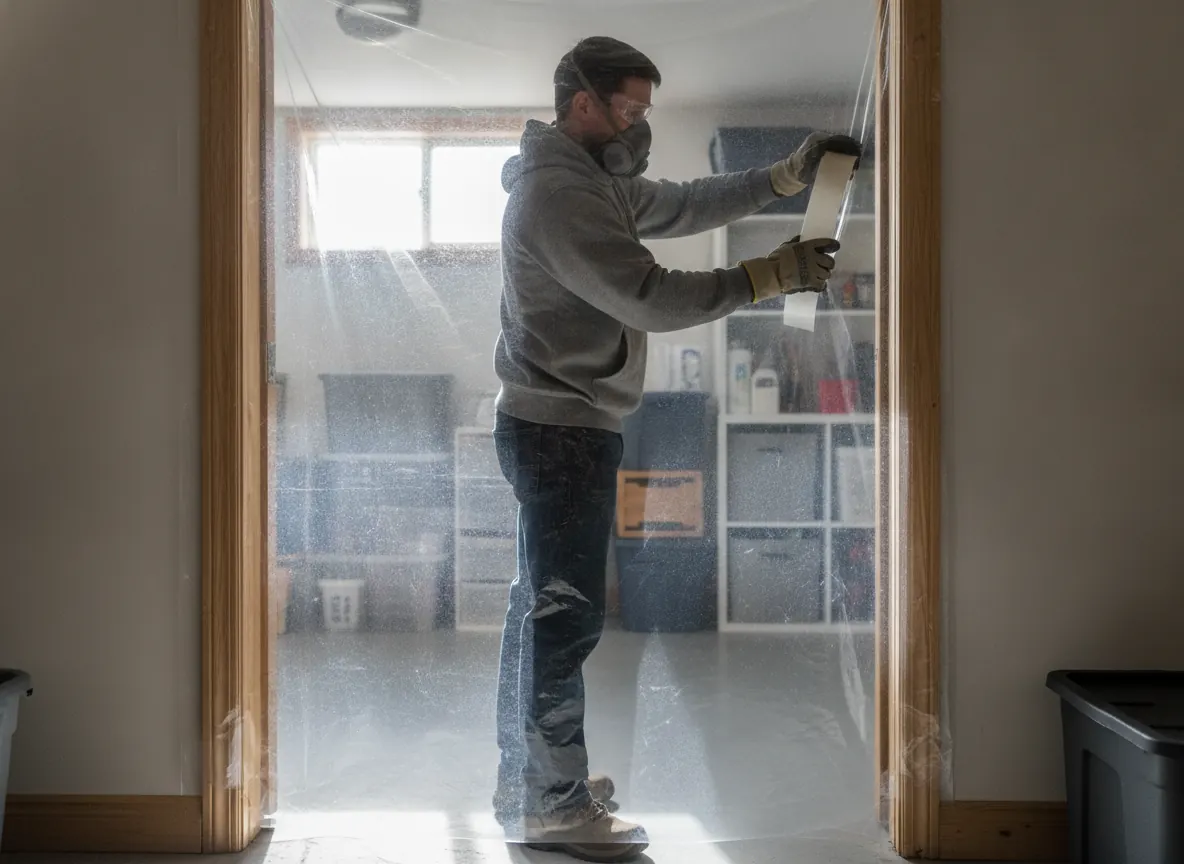
The short version
Find the water. Contain the area. Remove what is moldy and clean what can be cleaned. Dry it and fix the source. Check the result before the walls go back up.
Ann Arbor Mold Experts is a free quote service and does none of this work. The steps below describe what independent mold companies in Ann Arbor and Washtenaw County typically do, so you can read their quotes with a clear picture of the job.
For areas under about 10 square feet, EPA says homeowners can often clean it themselves. Clean hard surfaces with detergent and water, wear gloves and eye protection, and dry the area fully. Bigger areas, mold in the ductwork, or mold that came back after cleaning are good reasons to get quotes.
The eight steps of a mold job
Describe the problem
Use the free quote form or call. Say where the mold is, roughly how big it looks, what got wet and when, and whether you own or rent. Describe your situation any time; companies reply on their own schedules.
Companies reply
Independent mold inspection and remediation companies that work in Ann Arbor and Washtenaw County contact you to ask questions, look at the problem and quote it. Companies may pay to receive requests, and you never have to hire any of them.
Optional independent testing
For hidden mold, a home sale or a dispute, you can hire an inspector first to find the moisture and map the mold. EPA says testing usually isn't needed when you can see mold, and Michigan's health department doesn't recommend routine testing. If you test, consider a tester who is independent of the remediator.
Written scope and contract
Get a written scope listing the rooms, containment, what will be removed, drying, any clearance test, and whether rebuild is included. Rebuild work of $600 or more generally needs a LARA-licensed Residential Builder or Maintenance & Alteration contractor; ask for the license number and verify it.
Containment and removal
The work area is sealed with plastic sheeting, vents are covered, and HEPA air scrubbers help keep spores from drifting. Moldy drywall, insulation and carpet are cut out and bagged. Concrete, block and framing are HEPA vacuumed and cleaned. Painting over mold is not a fix.
Drying and fixing the moisture source
Dehumidifiers and air movers run until moisture readings are back to normal. The water source has to be fixed too: a plumbing leak, a failed sump pump, grading and downspouts, a bath fan or a roof leak. Otherwise the mold tends to come back.
Optional clearance test
Before walls are closed, an independent tester can check the area visually, with a moisture meter and sometimes with air or surface samples. It is most useful after larger jobs, for a sale, or for a landlord who wants records.
Records
Keep the contract, the scope, photos, invoices and any test results together. They help with insurance, a future sale or a landlord-tenant question. Rebuild comes next and may need a permit from your city or township.
Where Michigan rules come in
Michigan doesn't license mold remediation companies, and the state health department doesn't certify mold remediators or testers. Repair and rebuild work of $600 or more, such as replacing drywall or insulation, generally needs a Residential Builder or Maintenance & Alteration license from LARA (MCL 339.2401–2404). Ask for the license number and verify it with LARA. Not every company that replies will hold that license, so check each one. Mold training credentials are private, not state-issued, so ask about training rather than treating a badge as a license.
EPA says testing usually isn't needed when you can see mold, and Michigan's health department doesn't recommend routine testing. If you do want testing before or after the work, using a tester who is independent of the remediator is sensible advice. Michigan has no rule that requires it.
You generally have 3 business days to cancel a contract signed at your home (MCL 445.111–.113). A company may ask you to sign a handwritten emergency waiver so work can start right away. Don't sign one under pressure unless the work truly can't wait. Michigan's Consumer Protection Act (MCL 445.903) bans misleading claims, and complaints go to the Michigan Attorney General.
What to ask for before work starts
- The LARA license number for any rebuild work. If the job includes replacing drywall, insulation or framing and comes to $600 or more, ask which Residential Builder or Maintenance & Alteration license covers it, then verify it with LARA yourself.
- A written scope. The rooms, the containment, what will be removed and what will be cleaned, how drying will be checked, and whether rebuild is included.
- Proof of insurance. Ask for a current certificate of liability insurance before anyone starts.
- A containment and clearance plan. How the work area will be sealed off, and how the company will show the area is clean and dry before walls are closed.
- Training. Michigan has no mold license, so ask what mold training the crew has.
- An independent tester, if you test. If you want testing before or after the work, it is sensible to use a tester who is independent of the remediator. That is advice, not a Michigan rule.
Mold cleanup itself usually isn't permitted work, but rebuilding (drywall, insulation, framing, waterproofing) often is. Your contractor should confirm with your city or township and pull any permit. In Ann Arbor's 15 local historic districts, such as the Old West Side, exterior changes like windows, siding or grading may need Historic District Commission review.
After the job: keeping mold from coming back
Most mold returns because the water does. In a Washtenaw County basement, the City of Ann Arbor's own advice after the June 2021 storm is a good list to start with:
- Footing drain disconnection. Ask whether your home's footing drains are connected to the sanitary sewer; the city has run a footing drain disconnection program.
- A check valve. A backwater or check valve on the sanitary sewer lead helps keep sewage from backing up into the basement.
- Downspouts and grading. Extend downspouts and slope soil away from the house so water drains away from the foundation.
- Humidity. Keep indoor humidity below 60 percent, ideally 30 to 50 percent (EPA). A dehumidifier in the basement through the humid months helps.
- Bath and dryer vents. Make sure bath fans and dryers vent outside, not into the attic or the basement.
More detail on basement mold, attic mold and mold inspection and testing. For prices at each step, see the cost guide and calculator, and for common questions, the mold FAQ.
Start with step one
Describe the problem once, and independent mold companies that work in Ann Arbor, MI and nearby towns can reply with quotes. No cost and no obligation. Companies may pay to receive requests.
Found mold or a musty basement? Get free quotes.
Describe it once and independent mold companies serving Ann Arbor and Washtenaw County can reply with no-obligation quotes.